
 Image 1 of 1
A loaf worth waking up early for.
This is the real deal — a whole wheat sourdough crafted the old-fashioned way, with nothing but stone-ground whole wheat flour, water, salt, and a living wild yeast starter. No additives. No preservatives. No shortcuts. Just time, patience, and the hands of a skilled baker who truly cares about their craft.
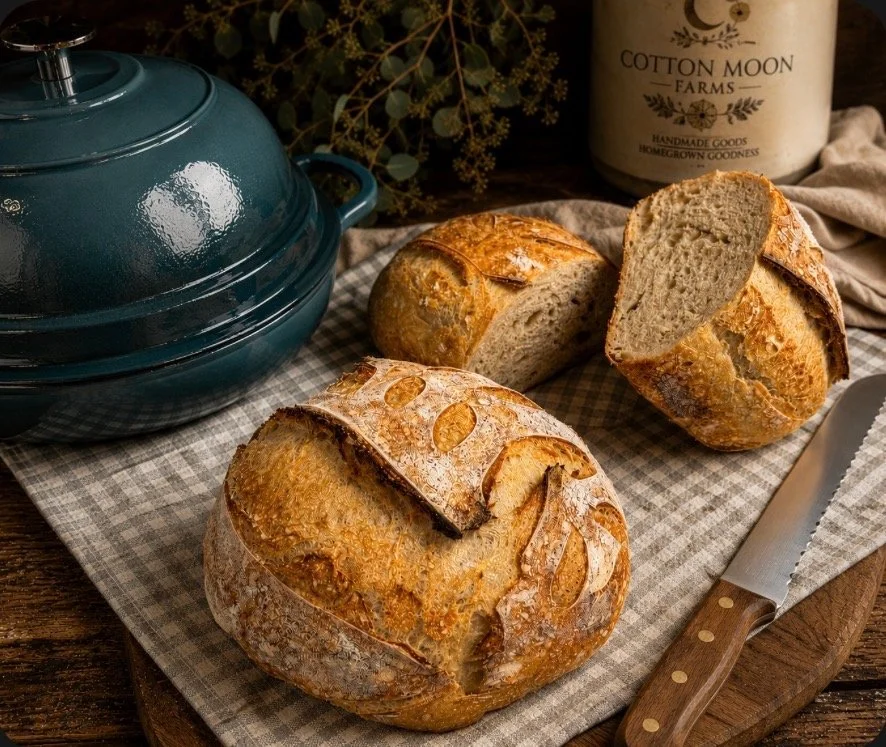
The moment you lay eyes on it, you know this loaf means business. The deep mahogany crust is thick, crackly, and dusted with a whisper of flour — scored with a confident slash that bloomed open in the oven like a work of art. Tap it with your knuckle and it sings — that hollow, resonant knock that tells you the structure inside is absolutely perfect. Biting through it delivers a satisfying crunch that echoes through the room.
Slice it open and breathe in. The interior is a gorgeous mosaic of irregular, open holes threaded through a creamy, warm-toned crumb — the unmistakable signature of a long, slow fermentation. It's moist but never gummy, with a tender chew that somehow manages to feel both hearty and delicate at the same time. The whole wheat flour gives it a nutty, earthy depth that refined flour simply cannot replicate.
This is where the magic lives. The flavor is complex and layered — a gentle tang from the wild fermentation, a rich, toasty nuttiness from the whole wheat, and a subtle sweetness that develops naturally as you chew. It's the kind of bread that makes you close your eyes on the first bite. Eaten plain, it's extraordinary. Slathered with good salted butter that melts into the warm crumb? Transcendent. Toasted with a drizzle of honey or a smear of avocado? You may never eat another bread again.
Because it was made slowly — over 24 hours of cold fermentation — the wild yeast had time to develop flavor compounds and break down the phytic acid in the whole wheat, making it easier to digest than commercial bread. There are no dough conditioners, no ascorbic acid, no sorbates. Just fermentation doing what it has done for thousands of years.
This is bread as it was always meant to be: alive, honest, and deeply delicious.
Pick one up before they sell out — and they always sell out.
A loaf worth waking up early for.
This is the real deal — a whole wheat sourdough crafted the old-fashioned way, with nothing but stone-ground whole wheat flour, water, salt, and a living wild yeast starter. No additives. No preservatives. No shortcuts. Just time, patience, and the hands of a skilled baker who truly cares about their craft.
The moment you lay eyes on it, you know this loaf means business. The deep mahogany crust is thick, crackly, and dusted with a whisper of flour — scored with a confident slash that bloomed open in the oven like a work of art. Tap it with your knuckle and it sings — that hollow, resonant knock that tells you the structure inside is absolutely perfect. Biting through it delivers a satisfying crunch that echoes through the room.
Slice it open and breathe in. The interior is a gorgeous mosaic of irregular, open holes threaded through a creamy, warm-toned crumb — the unmistakable signature of a long, slow fermentation. It's moist but never gummy, with a tender chew that somehow manages to feel both hearty and delicate at the same time. The whole wheat flour gives it a nutty, earthy depth that refined flour simply cannot replicate.
This is where the magic lives. The flavor is complex and layered — a gentle tang from the wild fermentation, a rich, toasty nuttiness from the whole wheat, and a subtle sweetness that develops naturally as you chew. It's the kind of bread that makes you close your eyes on the first bite. Eaten plain, it's extraordinary. Slathered with good salted butter that melts into the warm crumb? Transcendent. Toasted with a drizzle of honey or a smear of avocado? You may never eat another bread again.
Because it was made slowly — over 24 hours of cold fermentation — the wild yeast had time to develop flavor compounds and break down the phytic acid in the whole wheat, making it easier to digest than commercial bread. There are no dough conditioners, no ascorbic acid, no sorbates. Just fermentation doing what it has done for thousands of years.
This is bread as it was always meant to be: alive, honest, and deeply delicious.
Pick one up before they sell out — and they always sell out.